From Rajasthan to Telangana
Morè is made through a growing network of artisans, makers and textile communities across India. Each collection begins with people who know these materials and traditions intimately. The same hands that tie the cloth, prepare the color, weave the yarn, bring each garment into form.
We work slowly and close to the source, building relationships with the people and places behind what we make.
This is where our clothes begin.
Rajasthan
Bandhani & natural color
Our first collection takes shape in Rajasthan, where centuries-old textile traditions continue to be practiced by hand.
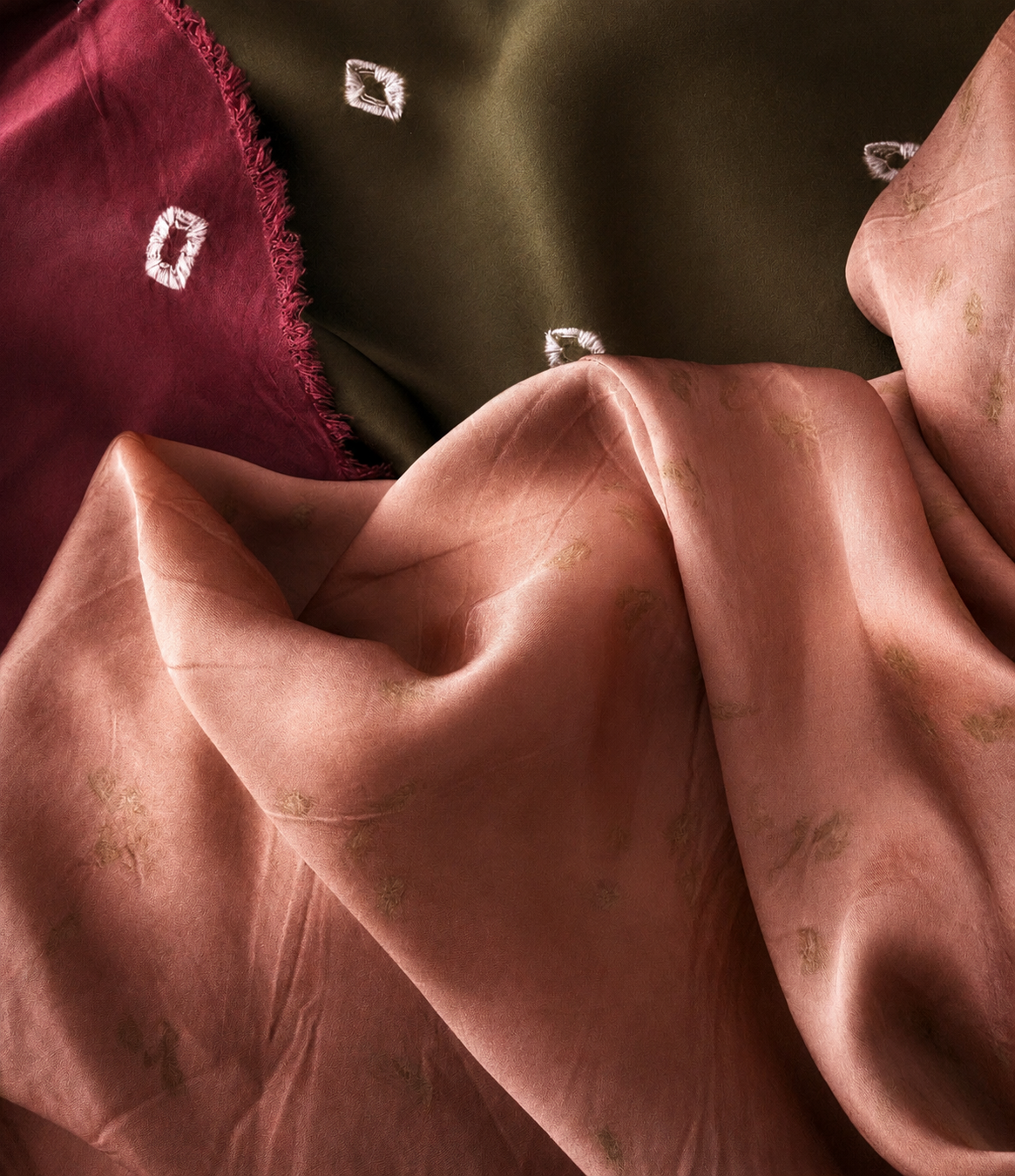
Bandhani begins before the cloth meets color. Tiny sections of fabric are individually gathered and bound with thread, creating hundreds of small points of resistance across its surface. Once dyed and released, those bindings reveal the characteristic marks of the craft.
The process is meticulous. So is the color.
Madder, sappanwood and marigold create the palette of our first Sutra Dresses. In our eco-printed edition, marigold flowers are placed directly against the cloth, leaving behind their own irregular impressions.
Color shifts from one piece to another. A Bandhani mark may fall differently. A flower leaves an impression that cannot be repeated exactly.
These aren't imperfections to be corrected. They are part of the language of something made by hand.
Saheli Women
Rajasthan, India
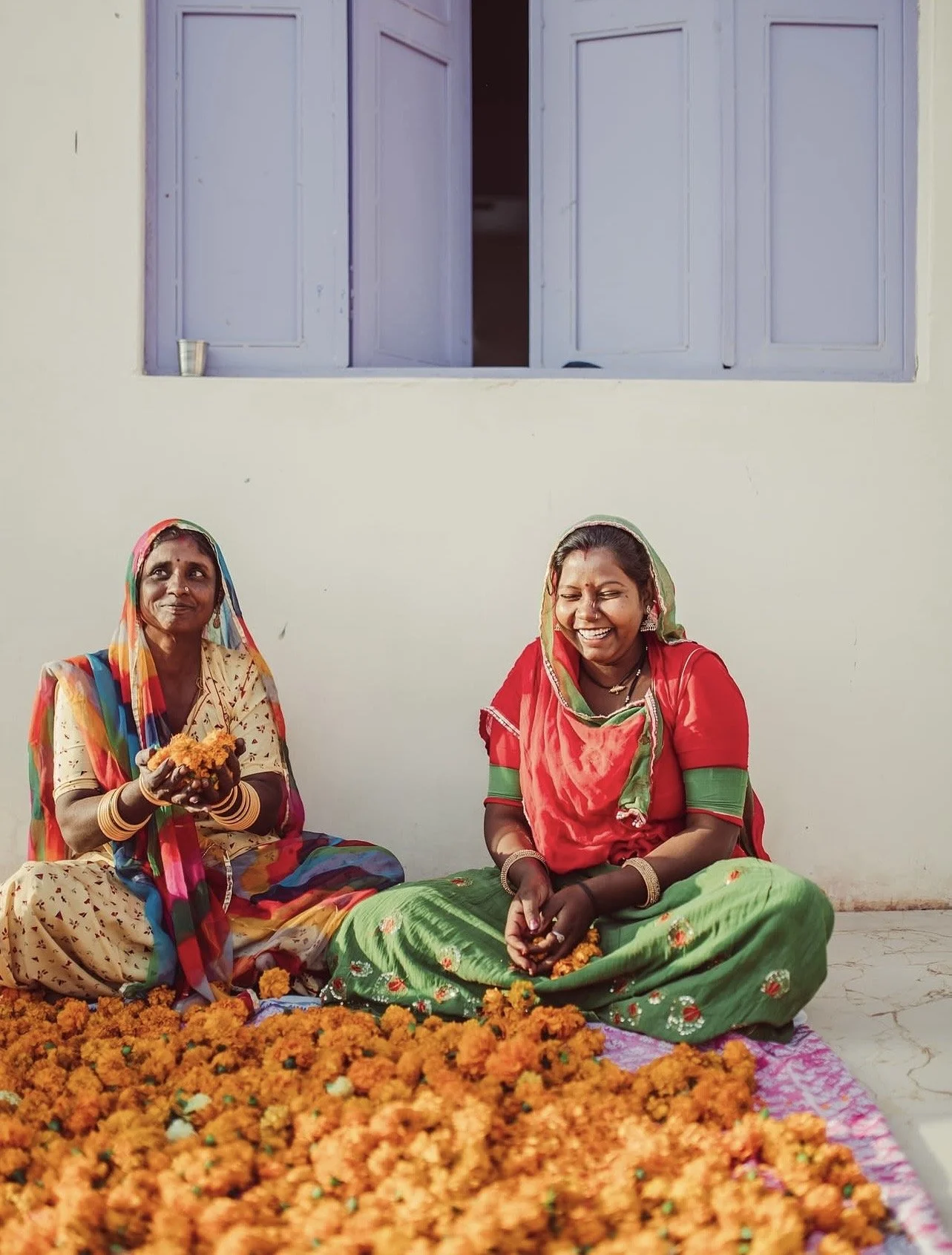
It began with five women.
Saheli Women began in 2015 in the village of Bhikamkor, Rajasthan, after founder Madhu Vaishnav met a community of women with very little access to independent income.
Madhu first came to the village offering humanitarian workshops. She soon saw that there was a limit to what those workshops could change when the women still had no reliable work of their own and little financial independence.
Many of the women already had sewing machines in their homes, given to them as part of their marriage dowries. What they needed was an opportunity to turn the skill they already had into a livelihood.
So they began with five women, those sewing machines, and roughly $100.
Today, Saheli Women is a community of more than 100 women artisans creating garments for independent designers around the world while providing skills training and sustainable livelihoods within their communities. Their ateliers are built around the lives of the women who work there, where work, children, chai, conversation and community can exist together.
When I first learned about Saheli, I was drawn to the women behind the work as much as the work itself. There is something powerful about having your own income, being able to contribute to your family, send your children to school, and have choices that may not have been available to you before.
I want you to know who makes the clothes you wear. I want you to know where they come from and to understand that there are real people, skills, histories and livelihoods behind them.
The women of Saheli are part of Morè from the very beginning.
Telangana
Ikat
The pattern begins before the cloth exists.
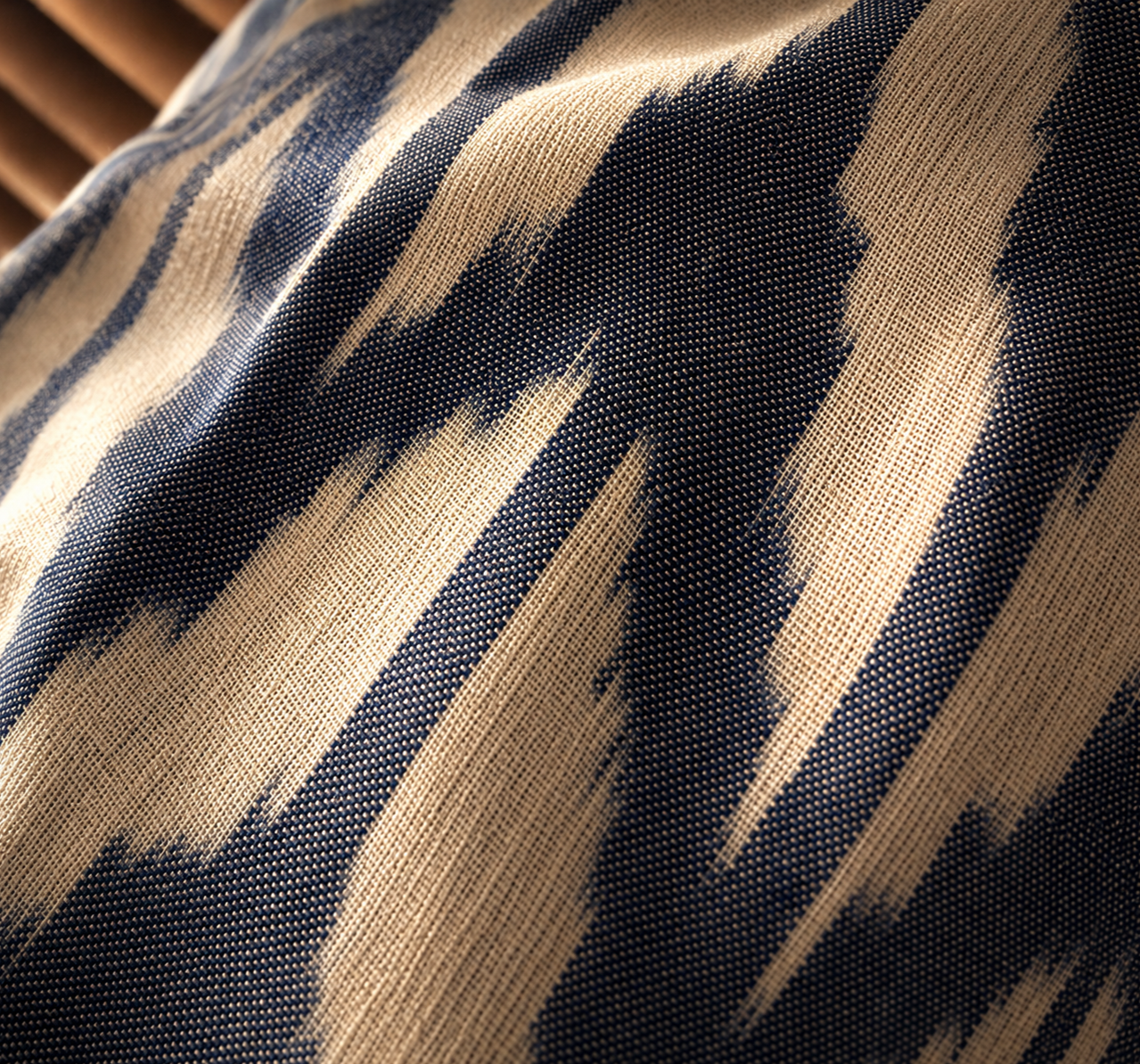
Long before the Leela Set takes shape, its pattern has already been mapped across hundreds of individual cotton threads.
Each section of yarn is carefully bound and resist-dyed according to where its color will eventually fall. Only once the dyeing is complete do the threads reach the loom.
Then, slowly, the textile takes form.
As the dyed threads are brought together through weaving, the pattern begins to reveal itself. Tiny shifts in their alignment create the softened, almost blurred edges that make Ikat immediately recognizable.
There is something beautiful about a textile that requires you to imagine the whole before you can see it.
Our Leela Sets are made from 100% cotton Ikat woven in Telangana, South India, carrying generations of textile knowledge into the first collection of Morè.
We want you to know where a textile came from, how it was made, and the people whose knowledge made it possible.
Every piece carries a sense of where it began. The material, the process, the hands that made it, and the traditions that have kept these crafts alive.
As Morè grows, so will this map. New regions, new relationships, new materials, and the traditions carried within them.